


You can hardly find any birdwatcher who doesn’t love to watch the magnificent bird cardinal. But you can indeed find many birdwatchers who know a little about this enigmatic birdie.
For example, very few know a bit about cardinal habitat. Sometimes, they notice this bird in their backyards, and sometimes, they spot cardinals in forests, near riverbanks, and other semi-open areas.
After seeing cardinals in various places, these bird lovers wonder where cardinals actually live. That’s what we are about to know through this article. Let’s read.
Related Articles
Explore Cardinal Locations by Region
Cardinal distribution can vary significantly by state and climate.
Cardinal populations vary widely across North America. Regional patterns include desert habitats in Arizona state, mountain landscapes in the Utah region, and expanding populations across Colorado state and New Mexico areas.
Additional observations come from California regions, introduced populations across the Hawaii islands, occasional records in Alberta province, and their ability to adapt successfully to urban city environments.
For rare color variations, see Where Do White Cardinals Live? for documented leucistic sightings, and Where Do Yellow Cardinals Live? to learn whether they’re rare mutations or a separate species.
Overview of Cardinal’s Habitat
The Northern Cardinal, aka redbird, common cardinal, or red cardinal, inhabits areas of southeastern Canada and the eastern United States.
You can spot this magnificent birdie in the woodlands, shrublands, gardens, and wetlands of Maine, Minnesota, Texas, New Mexico, southern California, southern Arizona, Mexico, Belize, Guatemala, Bermuda, and Hawaii.
Apart from all these places, you can find a cardinal, precisely its types, and look-alikes in various other states and countries. You will learn everything about these cardinal habitats in the following section.
What Are The Different Habitats Of Northern Cardinals?
Although the northern cardinals choose different trees to build their nests for living purposes, they select various other places to live. For instance, you can find these songbirds mostly in dense shrubs.

Also, they pick overgrown thickets, swamp areas, marshlands, woodlands, deserts, and areas covered with thick vegetation as their habitats. These birds are year-round residents of such places.
What Do Northern Cardinals Eat To Live?
The majestic northern cardinals consume a wide variety of foods to thrive in the wild. They are ground eaters and primarily feed on safflower and black oil sunflower seeds.

They also gobble beetles, tree bugs, grasshoppers, caterpillars, flies, ants, mealworms, and more. Oddly, these birds eat centipedes, snails, and spiders too.
Their diet chart continues. The northern cardinals can consume berries and fruits, and when the food scarcity rises, they can eat carrion too.
How Long Do Northern Cardinals Live?
The northern cardinals have a satisfying lifespan of about three to five years, allowing them to explore the wild entirely. Some cardinals can break the usual lifespan barrier and live up to eight years in desert areas.
Besides, there is an exception: a northern cardinal is reported to live for 28 years in the wild. However, an exception can’t be an example. Hence, the average lifetime of a northern cardinal is around three years.
What Predators Do Northern Cardinals Have?
Although the stunning northern cardinals have a decent lifespan, some don’t make it. Yes, some cardinals die earlier than living for around three years.

And they die because of the predators, which include hawks, squirrels, owls, snakes, dogs, cats, blue jays, and other predatory animals. These beings always remain a life threat to cardinals.
What Kind Of Climate Do Northern Cardinals Prefer To Live in?
The northern cardinals prefer the warm climate more than the cold environment. It’s because cardinals get a whopping amount of food during the summer. Also, they can easily find water sources this time.
On the contrary, these birds lead miserable lives in the winter. They don’t find food near their habitats, nor do they get enough water supply to live. Hence, they venture from place to place in search of food and water during this time.
What Is The Range Of The Northern Cardinal?
Nowadays, northern cardinals are widespread pretty much all across the globe. You can spot these birds in eastern and central North America.
These birds also reside in southern Canada and some parts of Central America. With time cardinals manage to inhabit some places of New England too.
Where Do Northern Cardinals Live In The Winter?
Northern cardinals have challenging times during the winter. They face difficulties in literally everything from finding food to searching for shelter, and they can barely live inside their nests at this time.
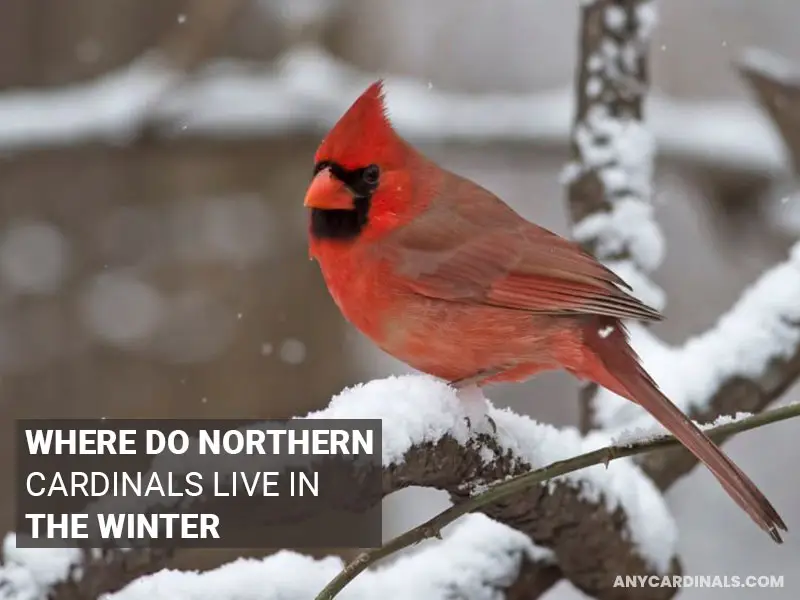
So, they seek shelter in branches of conifer trees, including cedar and pines. Also, these birds live under fallen trees, inside tree cavities, and in dense forests and shrubs during the winter months.
Do Cardinals Live In Nests?
Indeed, cardinals reside in nests but not for a prolonged period. The northern cardinals build their nests in trees, shrubs, vine tangles, or anywhere 15 feet above the ground.
They start building their nests during the breeding period, and male and female cardinals live in their nests until the females lay eggs. During the incubation time, only female birds stay inside the nest, and males choose ground, tree branches, or other places to live.
Which Trees Do Cardinals Choose To Live?
Cardinals choose myriad trees for nesting. For instance, you can spot their nests on mulberry, flowering dogwood, serviceberry, crabapple, pines, cedar, spruce, and many other trees.
These trees are the cardinals’ go-to places to inhabit. Hence, you may plant them in your yards if you want to lure cardinals to your backyards.
Do Cardinals Live In The Same Area?
Cardinals are year-round residents of their birthplace. Although they abandon their nests and sometimes mate, these tiny songbirds never leave their territories unless compelled to.
Yes, they need to leave their areas when natural calamities destroy their places, predators invade, or these birdies no longer find enough food for them to thrive in the wild.
Do Cardinals Live In Birdhouses?
Cardinals don’t prefer residing in traditional birdhouses that bird watchers usually utilize to lure and give these birds a comfy place to live.

The northern cardinals choose birdhouses to live in that are specially designed for them. You may read this content if you want to know more about such kinds of birdhouses.
Habitats of Different Cardinal Types and Look-Alikes
Before digging deeper into habitats of varied cardinal types and look-alikes, we recommend glancing through the table below.
| Cardinal Types & Its Look-Alikes | Geographical Habitat |
|---|---|
| Northern Cardinal | Southeastern Canada and the eastern United States |
| Desert Cardinal (Pyrrhuloxia) | Southwestern United States and northern Mexico |
| Vermilion Cardina | Northern South America |
| Red-crested Cardinal | Southeastern South America, Hawaii, and Puerto Rico |
| Red-cowled Cardinal | Rio De Janeiro and São Paulo |
| Red-capped Cardinal | Guianas, eastern Colombia, Venezuela, and many other areas |
| Masked Cardinal | Trinidad, northeastern Colombia, and northern Venezuela |
| Yellow-billed Cardinal | Brazil, Central South America, Paraguay, Bolivia, etc. |
1. Northern Cardinal
The Northern Cardinal is a permanent inhabitant of southeastern Canada and the eastern United States. It loves residing near the edges of forests.
It also builds open twig cups in woodlands with scattered trees, thickets, hedgerows, and overgrown fields. Besides, the Northern Cardinal chooses wet areas with plenty of tall grasses and shrubs for residing purposes.
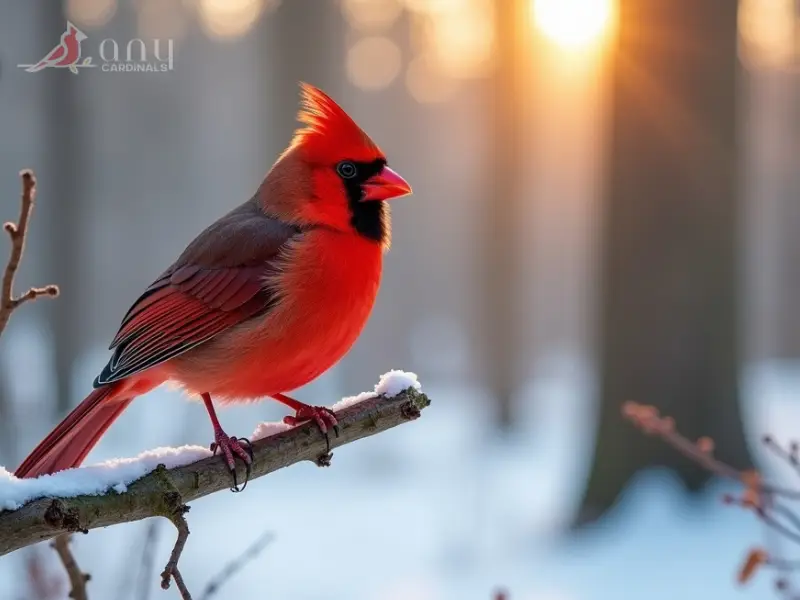
The Northern Cardinal of the southwestern United States tends to construct its nest in mesquite thickets. Lastly, this colorful bird often lives in backyards and gardens, where it can find plenty of shrubs, food, and shelter.
2. Desert Cardinal
The Desert Cardinal, aka Pyrrhuloxia, is a magnificent bird found in the arid regions of the southwestern United States and northern Mexico.
Although this bird is a relative to the mighty Northern Cardinal, it adapts to thrive in the harsh desert environment. Primarily, it chooses low-growing shrubs, cacti, and other desert vegetation as its habitat.
Besides, the Desert Cardinal prefers mesquite trees in woodlands as its nesting site. You can also spot this birdie near streams and rivers of riparian areas.
Lastly, you can find Pyrrhuloxia in parks, gardens, and other related areas, offering this bird a suitable cover and food source.
3. Vermilion Cardinal
The Vermilion Cardinal is a resident of northern South America. Precisely, it lives in the Guajira Peninsula of northeastern Colombia and Venezuela.
This medium-sized songbird’s preferred habitat is semi-arid scrubland. You can spot this bird perched on Cacti. You can also find its nest in spiny legumes and dry and thorny bushes in scrubland.
Due to the availability of food and shelter against the sun and protection from predators, the Vermilion Cardinal chooses this kind of spiny vegetation featuring semi-arid environments as its habitat.
4. Red-crested Cardinal
The Red-crested Cardinal is an inhabitant of southeastern South America, Hawaii, and Puerto Rico. This colorful birdie prefers living close to lakes, marshes, and rivers.
Additionally, this bird favors areas with a mix of scattered trees, grasslands, and shrubs. Last but not least, It chooses degraded forests, savannas, farmlands, parks, gardens, and other semi-open areas to build its nest.
5. Red-cowled Cardinal
Endemic to Brazil, the Red-cowled Cardinal is prevalent in Rio De Janeiro and São Paulo. Primarily, this bird inhabits open woodlands featuring trees and shrubs.
It also chooses shrublands since these arid and bushy areas provide dense vegetation. You can also spot the Red-cowled Cardinal in rainforests.
Over time, this bird has adapted well to urban environments. Therefore, you can see it in parks and gardens with trees, shrubs, and ornamental plants.
Finally, this bird frequently visits backyards with trees and bird feeders in some Brazilian cities. You may count backyards as the Red-cowled Cardinal’s optional habitat.
6. Red-capped Cardinal
The Red-capped Cardinal resides in lowlands of the Guianas, eastern Colombia, Venezuela, eastern Ecuador, eastern Peru, northern and eastern Bolivia, and the Amazon basin in Brazil.
Besides, this bird is widespread in Argentina, Paraguay, Uruguay, Hawaii, Puerto Rico, and Chile.
Regarding habitat preferences, it chooses swamps, mangroves, várzea, parks, lawns, degraded forests, lakes, riversides, and other semi-open areas adjacent to water.
This bird is common in lightly wet woodlands (e.g., Manaus and Puerto Maldonado).
7. Masked Cardinal
The Masked Cardinal is ubiquitous in Trinidad, northeastern Colombia, and northern Venezuela. This vibrant birdie chooses a wide variety of open and moist areas as its habitat.
You can spot the Masked Cardinal in lowland areas, mangroves, oxbow lakes, riversides, and other semi-open areas. Also, it prefers wet savannas, edges of gallery forests, and scrublands.
8. Yellow-billed Cardinal
The Yellow-billed Cardinal looks similar to the Red-crested Cardinal. Nonetheless, it doesn’t come with the cardinal’s signature body feature – crest.
This adorable birdie occurs in Brazil, Central South America, Paraguay, Bolivia, Uruguay, and northern Argentina. The Yellow-billed Cardinal prefers waterside habitats with dense vegetation.
Primarily, it chooses moist shrublands, forested marshes, flooded fields, and lakeshores as its habitat.
9. Yellow Cardinal
The Yellow Cardinal is a scarce species. You need to be incredibly lucky to spot this bird in Argentina, Brazil, Paraguay, and Uruguay.
You need to venture into dry savannas, open woodlands, moist shrublands, grasslands, and temperate shrublands to find the Yellow Cardinal.
Yes, this rare and enchanting bird loves living in these areas where it easily finds food and shelter.
Frequently Asked Questions
Where Do Most Cardinals Live?
You can find the Northern Cardinal in most areas of the United States. Specifically, you can easily spot this birdie if you visit some specific states, such as Arizona and California.
Where Do Cardinals Nest at?
Generally, the Northern Cardinal builds its nest in dense shrubs, vines, or low trees situated 3-10′ above ground. Female cardinals construct open-cup nests using twigs, weeds, grass, bark strips, leaves, rootlets, etc.
What is the Best Habitat for Cardinals?
The Northern Cardinal enjoys living in secluded areas featuring thick foliage with plenty of trees and shrubs. Cardinals mostly prefer tall trees, shrub thickets, and grapevines to build their nests.
Do Cardinals Stay in the Same Area for Life?
The Northern Cardinal usually spends its entire life in the same area since it’s a non-migratory bird. However, cardinals can seek new territory if their existing one becomes inhabitable due to predators or food scarcity.
Conclusion
Cardinal chooses several areas with diverse natural elements as its habitat. From bustling cities to quiet deserts, cardinals thrive in varied environments.
Cardinals love to build nests in dense forests, where they find adequate food and shelter to thrive. You can also spot them near lakes, wet woodlands, shrublands, parks, and gardens.
These places are all cardinal habitats. However, we think you now know everything about cardinal habitat. If you do, please appreciate our effort by sharing this content on Facebook, X, and Pinterest.
Cardinal Habitat Quarries
- Where Do Cardinals Sleep At Night?
- Where Do Cardinals Go In The Winter?
- How Large Is A Cardinals Territory?
- Do Cardinals Live In Colorado?
- Do Cardinals Live In California?
- Do Cardinals Live In Arizona?
- Are There Cardinals In Utah?
- Do Cardinals Have Natural Predators?
- Do Cardinals Prefer Dense Shrubs?
- Range of the Northern Cardinal