

Can Cardinals Live in Urban Areas? City Habitat Facts

Northern Cardinals are highly adaptable songbirds that can successfully live-in urban areas when cities provide shrubs, small trees, and reliable food sources such as bird feeders. They are most frequently seen in suburban neighborhoods, park edges, and landscaped residential areas where dense vegetation offers the cover they naturally prefer.
Many people ask Do Cardinals Live in Cities? The accurate answer is that cardinals use cities selectively: they thrive where urban green space creates the shrubby, edge style habitat they prefer.
What to Know First?
Cardinal activity often connects closely to their habitat, food choices, and survival behavior. For deeper insight, see whether cardinals prefer dense shrubs, which trees attract cardinals most, what natural predators cardinals face, and whether cardinals feed other birds in backyard environments.
Do Northern Cardinals Naturally Adapt to Urban Environments?
Northern Cardinals show strong urban habitat flexibility, particularly where cities provide dense shrubs and layered vegetation. This adaptability explains why they can adjust to developed landscapes when suitable cover and food are available.
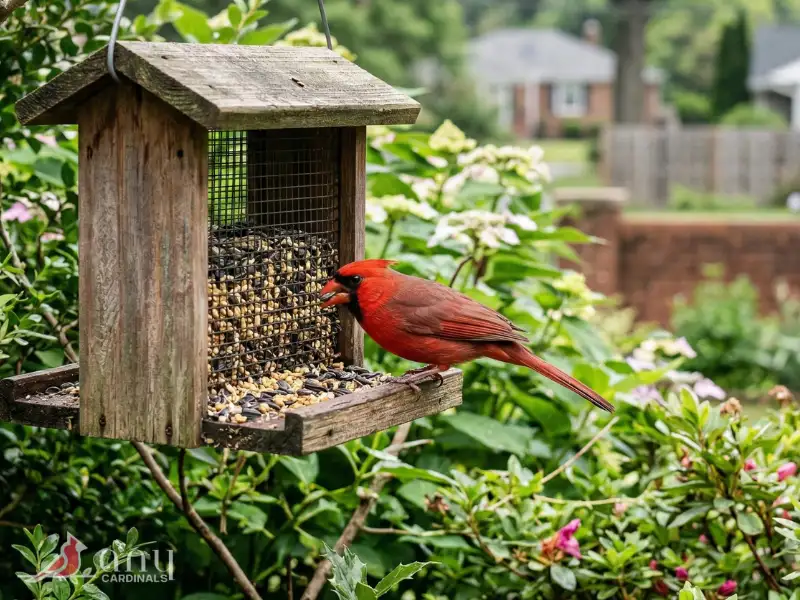
What Makes Cardinals Urban Tolerant?
Northern Cardinals are built for “edges,” meaning transition zones where shrubs meet trees, lawns, or open ground. That habitat type is not only natural, it is also common in human shaped landscapes such as hedges, overgrown fence lines, and planted thickets around homes.
Cornell Lab’s species account emphasizes that cardinals use backyards, hedgerows, and ornamental landscaping, and that growth of towns and suburbs has supported their range expansion.
In practical terms, cities supply two things’ cardinals need:
- protective cover close to the ground
- predictable food, especially seeds and fruiting plants in managed landscapes
Cardinals are also non migratory across most of their range, which means an urban patch with year-round resources can hold them consistently instead of only seasonally.
Synanthropic Birds Explained
A “synanthropic” bird is one that benefits from human modified environments. Cardinals are not “pigeons of the woods,” but they are flexible and often successful near people because suburbanization increases edge habitat and plantings that mimic the thickets they prefer.
Cornell’s life history notes that expanding towns and suburbs helped cardinals expand northward.
This is why Can Northern Cardinals Thrive in Urban Areas is usually a “yes” when the urban setting includes shrubs, small trees, and connected green space.
Are Cardinals More Common in Suburbs Than Dense Cities?
Generally, yes. Dense downtown blocks tend to be short on two essentials: low cover and continuous vegetation. Cardinals can occur in cities, but they concentrate where greenery is layered and connected, such as:
- residential neighborhoods with hedges and shrub beds
- park edges with brush and tangles
- rail corridors and river paths that function as green corridors
Cornell’s habitat description explicitly lists backyards and ornamental landscaping as cardinal friendly contexts, which aligns more with suburbs and greener neighborhoods than with urban cores.
Where Do Cardinals Live Inside Cities?
Within cities, Northern Cardinals concentrate in areas that provide dense shrub cover and connected green space rather than heavily built urban cores. Neighborhood landscaping, park edges, and vegetated corridors create the structural habitat they rely on for feeding and nesting.
Shrubs, Hedgerows, and Residential Landscaping
If you see a cardinal regularly in a city, check the structure of the yard or block. Cardinals prefer a “layered” look: ground cover, shrubs, and a few small trees. Thick shrub beds and hedgerows offer:
- concealment from predators
- wind shelter in winter
- low, protected nest sites
Cornell’s life history highlights dense shrubby areas and ornamental landscaping, and it notes that cardinal’s nest in dense foliage.
Field style observation that matches what many backyards’ birders report: cardinals often use the same general “thicket zone” daily, moving between cover and open feeding spots, then retreating quickly when disturbed.
Parks, Cemeteries, and Green Corridors
Urban parks can be excellent cardinal habitat when they include shrubby borders and brush. Cardinals often avoid the open center of athletic fields but use:
- trail edges with brush
- restoration zones with native shrubs
- creek lines and riparian strips
These areas act as safe movement routes between patches, reducing the isolation problem that makes some city landscapes harder for shrub birds.
Apartment Complexes and Small Yards
Cardinals do not require large territory sizes like some forest specialists. A small yard can support them if it offers dense cover plus food. In apartment heavy areas, they may persist where complexes plant thick shrubs, install water features, or border larger green spaces.
A useful rule: if you can stand in one spot and see shrub cover within a quick hop in multiple directions, it is more “cardinal shaped” than it looks on a map.
Do Cardinals Nest in Urban Areas?
In urban settings, Northern Cardinals regularly establish nests where dense shrub cover provides concealment and stability. Nest placement and success in cities depend largely on vegetation structure, local predator pressure, and the level of consistent human disturbance.
Preferred Nest Locations in Cities
Yes, cardinals commonly nest in cities, especially in residential and park settings with thick vegetation. Cornell notes that cardinal’s nest in dense foliage and use fairly high perches for singing, while placing nests in concealed spots in shrubs or low trees.
In urban yards, common nest supports include:
- dense ornamental shrubs
- vine covered fences
- small evergreen screens
- low branching trees near shrub cover
The key is concealment. Cardinals are visually obvious as adults, but their nesting strategy relies on being hard to see.
Do Human Disturbances Affect Nesting?
Cardinals are fairly tolerant of normal human activity, but tolerance has limits. Disturbances that matter most are repeated and close, such as:
- routine trimming of the shrub holding the nest
- pets repeatedly running through nest cover
- constant activity directly adjacent to the nest
Noise alone is not always the deciding factor. More often, the issue is whether the birds can maintain a concealed, predictable space to incubate and feed young.
Practical observation: when cover stays intact, cardinals often continue nesting even with regular human presence nearby.
Nest Success Rates in Urban vs Rural Areas
Urban nesting success is not automatically better or worse. It depends on local predators, cover, and habitat structure. Urbanization can alter predator communities and nesting risk patterns, and research on nest predation pressure finds that predation can increase with urbanization in some contexts.
What this means for Northern Cardinals:
- If your neighborhood has many free roaming cats or fragmented vegetation, nest success can be pressured.
- If your area has thick shrubs, less roaming predation, and fewer “edge traps” like exposed shrubs next to high predator activity, nesting can be quite successful.
Urban nesting patterns are only one part of the species’ broader habitat range. For a complete look at their distribution across North America, see Northern Cardinals Live.
What Attracts Cardinals to Urban Backyards?
Urban backyards attract Northern Cardinals when they combine dense shrub cover with consistent food and water sources. A yard that offers protective vegetation alongside safe feeding areas closely mirrors the edge habitat cardinals naturally prefer.
Bird Feeders and Seed Availability
Bird feeders are a major reason cardinal are so visible around people. Seed feeders provide consistent calories, especially in winter. High quality sources also note that human development and suburban growth have supported cardinal range expansion, with managed landscapes and feeding often cited as contributing factors.
For city yards, feeder strategy matters more than feeder quantity:
- Use tray or hopper styles that accommodate a larger, ground oriented songbird.
- Keep seed fresh and the feeding area clean to reduce disease risk.
- Place feeders where cardinals can retreat into shrubs quickly.
A detailed breakdown of seeds, fruits, and insects’ cardinals prefer is covered in What Do Cardinals Eat? which explains their natural diet as well as the foods they commonly take a backyard feeder.
Water Sources in Developed Areas?
In cities, water can be the hidden limiter. Cardinals will use a shallow bath or dripper, and consistent clean water can keep them visiting even when natural puddles dry up. Place water close to cover, not in the wide open, so birds feel safe.
Native Plants That Support Urban Cardinals
Urban cardinal habitat is often created, not “found.” The best planting approach is structural:
- at least one dense shrub mass for cover
- additional shrubs or small trees that create layers
- some native fruiting plants that support insects and seasonal foods
If you’re selecting plants specifically to support cardinals, see What Trees Attract Cardinals Most? for a breakdown of tree species that provide ideal cover and food.
Challenges Cardinals Face in Cities
Urban environments expose Northern Cardinals to specific anthropogenic risks that differ from purely rural settings. In cities, survival is shaped not only by habitat structure but also by hazards such as glass, free roaming predators, and fragmented green space.
Window Collisions
Window collisions are a major urban and suburban bird mortality factor, especially around homes and low-rise buildings. Audubon provides practical collision prevention guidance such as making glass more visible and using strategies like blinds, films, or exterior treatments.
If you feed cardinals, do not unintentionally increase collision risk. A well supported best practice is to place feeders very close to windows or far away, because mid distance placement can increase dangerous flight speed into glass.
Outdoor Cats
Outdoor and free roaming cats are one of the largest human associated threats to birds. A major Nature Communications review estimated billions of bird deaths annually in the U.S. from free ranging domestic cats, with unowned cats responsible for the majority.
For Northern Cardinals, the risk is highest where feeding stations and shrub cover concentrate birds at predictable points. If your goal is to help cardinals thrive, the most impactful step is reducing cat access to the yard and keeping feeding areas away from ambush cover.
Habitat Fragmentation
Fragmentation matters because cardinals prefer moving through cover. Tiny isolated patches can still hold cardinals, but connectivity increases stability. In practice, a line of shrubs or a connected park edge can be the difference between a regular pair and occasional sightings.
Noise and Light Pollution
Cardinals are not nocturnal migrants like many songbirds, but urban lighting can still alter predator activity and bird behavior patterns. More broadly, outdoor lighting and glass contribute to collision risk across birds, and “lights out” style guidance is increasingly promoted by conservation groups.
Urban vs Rural Cardinals What’s Different?
Although the species is the same, urban and rural Northern Cardinals experience different ecological pressures that influence density, territory size, and behavior. Resource concentration, habitat structure, and human presence shape how cardinals’ space themselves and respond within each environment.
Population Density Comparison
Cardinals can be locally abundant in suburban and semi urban zones because food and edge habitat are continuous and stable. Cornell explicitly notes that towns and suburbs supported expansion.
In rural settings, cardinals can be common too, but distribution often depends on whether there are thickets, hedgerows, and brushy edges. Pure closed canopy forest or large open agricultural fields without hedgerows can be less favorable than a patchwork suburban landscape.
Territorial Size Differences
Where feeders and plantings concentrate resources, cardinals may maintain smaller territories because “needs are met” within a tighter area. In more natural rural mosaics, birds may range farther between feeding and nesting micro sites. This is a common ecological pattern: territory size often tracks resource distribution.
Behavioral Changes Around Humans
Urban cardinals often appear bolder, but it is usually selective confidence. They may tolerate people walking past, yet still rely on cover and retreat quickly when startled. Watch for the pattern:
- feed briefly in the open
- return to cover
- sing from a visible perch nearby
That rhythm is the cardinal’s urban compromise: visibility for communication, concealment for safety.
Comparison Table: Urban vs Rural Northern Cardinals
| Factor | Urban and Suburban | Rural and semi natural |
| Nest Sites | ornamental shrubs, hedges, vines | natural thickets, hedgerows |
| Food Sources | bird feeders, landscaped fruits | seeds, fruits, insects in habitat |
| Key Risks | window collisions, outdoor cats | raptors, snakes, variable food |
| Movement | favors green corridors | broader edge networks |
Are Cardinals Expanding Due to Urbanization?
Changes in climate patterns, expanding suburbs, and increased landscaping have helped Northern Cardinals spread into new areas over time. Urban and suburban environments often create the shrub rich habitats that support this gradual range expansion.
Historical Range Expansion Northward
Multiple sources note that the Northern Cardinal expanded northward over time, with suburban growth and associated habitat changes considered contributing factors. Cornell’s life history directly links range expansion to the growth of towns and suburbs.
There is also peer reviewed research examining how cardinals occupy novel environments and face selection pressures, including urban contexts.
Role of Backyard Feeding in Population Growth
Backyard feeding can support individuals and may stabilize local populations by providing consistent winter food. However, it is best framed as “supportive,” not the sole driver.
Habitat structure, climate, and suburban vegetation changes all interact. Cornell’s habitat description emphasizes that urban and suburban development increased suitable environments and aided expansion.
Frequently Asked Questions
Questions about urban Northern Cardinals often focus on where they live, how they nest, and whether cities provide suitable habitat. The answers below clarify how Northern Cardinals adapt to urban areas and what conditions allow them to thrive around neighborhoods and city parks.
Can Cardinals Live in Big Cities Year-Round?
Yes, Northern Cardinals can live year-round in cities when neighborhoods provide shrubs and reliable food. They are usually less common in dense downtown areas with little vegetation.
You will see them more in parks, residential blocks, and places with connected green space. This pattern matches the species’ strong association with shrubby habitat and landscaping.
Do Cardinals Live in Cities or Only Suburbs?
Do Cardinals Live in Cities? Yes, but suburbs often hold higher numbers. Suburban areas combine gardens, shrubs, and feeders with lower intensity development. Many cities still support cardinals in greener districts and along park systems. The key variable is not “city” vs “not city,” it is habitat structure.
Can Northern Cardinals Thrive in Urban Areas Without Bird Feeders?
Yes, if the urban area has natural food sources like seeds, berries, and insects supported by vegetation. Feeders can increase visibility and reliability, especially in winter, but they are not required.
Planting shrubs and maintaining cover can be equally important for long term presence. Cornell’s habitat notes emphasize cover and shrubby structure as core needs.
Do Cardinals Nest in Neighborhoods and City Yards?
Yes. Cardinals frequently nest in dense shrubs, vines, and low trees within residential landscapes. They prefer concealed locations, so thick foliage is more important than yard size. Avoid pruning or hedge trimming during nesting season if you suspect a nest is present. Cornell’s life history highlights nesting in dense foliage.
Why Do I See Cardinals at My Feeder but Not Elsewhere in My City?
Feeders concentrate food and pull birds into view. In many urban environments, suitable shrub cover is patchy, so birds may spend most of their time in a few protected spots. If your feeder is near cover, it becomes a reliable “safe stop.” Expanding shrub cover and adding water often increases off feeder sightings.
Are Urban Cardinals at Higher Risk from Predators?
Often, yes, especially from outdoor cats and from hazards like windows. A major study estimates very large bird mortality from free ranging domestic cats in the U.S., which makes cat access a serious issue in residential settings.
Other predators still matter, but in many city neighborhoods, cats and glass can be more consistent threats than wild predators.
How Can I Make My Backyard Safer for City Cardinals?
Start with bird friendly windows and safer feeding placement. Audubon recommends practical steps like making glass more visible and using measures that reduce collisions.
Next, reduce cat access and keep feeders away from ambush cover. Finally, add dense shrubs so cardinals always have a quick retreat route.
Do Urban Cardinals Behave Differently Than Rural Cardinals?
They are the same species with the same core behaviors, but urban birds may appear more tolerant of people. In practice, they often adjust their routines, feeding quickly in open spaces and retreating to cover.
Urban resource concentration can also change how tightly they use space. The biggest differences usually come from the environment, not from the birds themselves.
Final Words
So, Can Cardinals Live in Urban Areas? Yes. Northern Cardinals commonly succeed in urban settings that include shrubs, small trees, and connected green space, which is why they are so familiar in suburban neighborhoods and city parks.
If you are also asking Do Cardinals Live in Cities? the practical answer is that they live where the city looks like edge habitat, not where vegetation is missing. The best way to help them is straightforward: build dense cover, place feeders safely, and reduce the top city risks like window collisions and outdoor cats.
References
- Cornell Lab of Ornithology, All About Birds, Northern Cardinal Life History and Habitat
- Miller et al. (2018) Ecology and Evolution, urban selection pressures and cardinal range context
- National Audubon Society, collision prevention guidance
- Loss et al. (2013) Nature Communications, free ranging domestic cat impacts on bird mortality
- Jokimäki et al. (2025) MDPI, nest predation pressure and urbanization context