

Do Cardinals Prefer Dense Shrubs? Complete Habitat Breakdown

Yes, Northern Cardinals prefer dense shrubs because thick, layered vegetation provides predator concealment, protected nesting sites, wind buffering, and close access to natural food sources. This type of shrub habitat supports higher breeding success and improves year-round survival compared to open landscapes.
These birds consistently select areas with heavy understory growth where visibility is reduced and structural cover is strong. Research from bird habitat studies and long-term surveys shows greater territory stability in environments dominated by dense vegetation, especially within edge habitat environments that combine shrubs and trees.
While trees serve as elevated singing and lookout perches, dense shrub cover plays the more critical role in protection and nesting support. Landscapes that include layered plant growth, particularly thick shrubs beneath taller canopy, create the balanced structure Northern Cardinals rely on for safety, reproduction, and seasonal shelter.
Cardinals choose dense shrubs for several measurable ecological reasons:
- Predator concealment from hawks, cats, and nest raiders
- Secure nesting sites 3–10 feet above ground
- Wind protection during cold weather
- Access to berries, seeds, and insects
- Structural territory boundaries within edge habitat environments
To build a truly cardinal-friendly yard, see our Cardinal Habitat guide outlining layered cover, seasonal food planning, nesting concealment, and habitat structure that supports year-round survival.
Why Dense Shrubs Matter to Northern Cardinals?
Northern Cardinals are classified as edge-habitat songbirds. They thrive where woodland meets open space, and shrubs form the structural bridge between those environments. Without a strong shrub layer, cardinal territory quality declines.
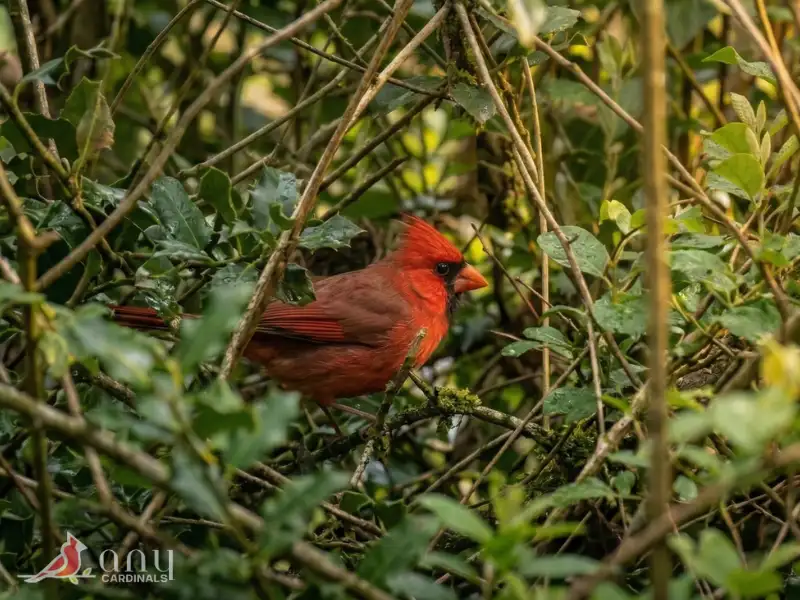
Protection From Predators
Cardinals face aerial predators such as hawks and owls, as well as ground predators including cats, snakes, raccoons, and corvids. Dense shrubs reduce visibility and disrupt predator line-of-sight tracking.
Studies referenced by the Cornell Lab of Ornithology describe Northern Cardinals as birds that favor thick undergrowth specifically because it improves nesting concealment. Tightly woven branches make it difficult for predators to access nests or flush resting adults.
Field observations consistently show that cardinals flush into shrubs rather than trees when alarmed. This behavior reflects their reliance on low, dense cover rather than high canopy refuge.
Microclimate Benefits
Dense shrubs create localized microclimates. During winter, evergreen foliage blocks wind and reduces heat loss. In summer, layered vegetation provides shade that protects nestlings from overheating.
Northern Cardinals are largely non-migratory across much of their range. Because they remain year-round, winter shrub cover becomes critical. Birds roosting in thick evergreens experience reduced exposure compared to individuals in open spaces.
Food Access Within Shrub Layers
Many shrubs produce berries and host insects. Holly, viburnum, dogwood, and elderberry provide seasonal food sources. Insects living within shrub foliage offer protein during breeding season.
Shrubs reduce exposure time while feeding. A cardinal can forage and retreat quickly, minimizing predator risk. This efficiency supports energy conservation and reproductive success.
Adding dense shrubs changes more than nesting. It affects where cardinals roost, how they survive winter, which trees they rely on most, and how much territory they protect. For deeper context, see What Trees Attract Cardinals Most?, Do Cardinals Have Natural Predators?, Where Do Cardinals Sleep At Night? and Can Cardinals Live in Urban Areas?
Scientific Evidence on Cardinal Habitat Selection
Long-term breeding bird surveys and habitat studies reinforce the relationship between Northern Cardinals and dense understory vegetation.
Research Findings from Habitat Studies
Data from North American Breeding Bird Surveys indicate higher cardinal densities in suburban neighborhoods and woodland edges with established shrub layers. Research characterizes the species as dependent on dense thickets and mixed vegetation zones.
Cornell Lab habitat profiles consistently describe Northern Cardinals as birds of “brushy fields, woodland edges, suburban shrubs, and dense undergrowth.”
Edge Habitat vs Open Fields
Open grasslands lack protective structure. Cardinals avoid vast open areas because exposure increases predation risk and reduces nesting concealment.
Edge habitats combine trees, shrubs, and open feeding areas. This structural diversity supports territory defense, foraging efficiency, and reproductive success.
Population Density in Shrub-Dominant Areas
Suburban areas with mature landscaping often host stable cardinal populations. In contrast, heavily cleared properties with minimal shrub growth show reduced nesting frequency.
Shrub density correlates with higher nest survival rates, particularly during peak breeding months.
Do Cardinals Nest in Dense Shrubs?
Most Northern Cardinal nests are constructed in dense shrubs or low trees between 3 and 10 feet above ground.
Ideal Nest Height in Shrubs
The mid-level height offers optimal concealment without excessive exposure. Too low increases vulnerability to ground predators. Too high reduces density and camouflage.
Shrubs provide the ideal nesting layer for balancing visibility and protection.
Common Shrub Types Used for Nesting
Cardinals frequently nest in:
- Dogwood
- Holly
- Cedar
- Rose bushes
- Honeysuckle
- Viburnum
The density of branching is more important than plant species alone.
Seasonal Changes in Shrub Use
During spring and summer, shrubs function primarily as nesting sites. In winter, they become roosting shelters. Evergreen shrubs are particularly important for year-round cover.
Shrubs vs Trees – Which Do Cardinals Prefer?
Cardinals use both shrubs and trees, but for different ecological purposes.
| Function | Shrubs | Trees |
| Nesting | Primary choice | Occasional |
| Predator concealment | Excellent | Moderate |
| Singing perches | Limited | Primary |
| Winter wind protection | High (evergreens) | Moderate |
| Foraging efficiency | High in dense cover | Moderate |
When Trees Are Preferred?
Trees provide elevated perches for territorial singing. Male cardinals use higher branches to project song during breeding season.
Trees also serve as lookout points before descending into shrubs for feeding or nesting.
When Shrubs Are Essential?
Shrubs are essential for nesting concealment, predator avoidance, and winter survival. Without dense shrub cover, nesting success declines significantly.
Best Habitat Is a Mix of Both
The most stable cardinal territories include layered vegetation – shrubs for security and trees for song projection. Structural diversity maximizes survival potential.
Best Dense Shrubs to Attract Cardinals to Your Yard
Homeowners can enhance cardinal-friendly landscaping by prioritizing dense, native shrubs.
Native Berry-Producing Shrubs
- American holly
- Elderberry
- Viburnum
- Serviceberry
These shrubs supply food and nesting cover simultaneously.
Evergreen Shrubs for Winter Shelter
- Eastern red cedar
- Juniper
- Boxwood
Evergreens maintain protection when deciduous leaves drop.
Shrub Placement Strategy
Plant shrubs in clusters rather than isolated lines. Layer vegetation to create depth and concealment.
Avoid placing feeders in completely exposed lawns. Cardinals prefer short flight distances between feeding areas and protective cover.
When Cardinals Avoid Dense Shrubs?
Although dense shrubs are preferred, certain conditions can temporarily alter usage patterns depending on habitat structure and resource availability.
Changes in vegetation density, seasonal food shifts, or disturbance levels may influence how frequently cardinals rely on thick cover in a given area.
Urban Environments
In heavily urbanized areas, cardinals adapt to ornamental plantings and limited vegetation. However, even small patches of dense shrubs improve habitat quality.
Predator Pressure
If predator presence becomes extreme, cardinals may temporarily shift nesting locations. Dense shrubs reduce but do not eliminate risk.
Seasonal Foraging Behavior
Cardinals occasionally forage in open spaces during seed abundance. Still, they return to shrubs for safety and rest.
Frequently Asked Questions
Do Cardinals Live in Thick Bushes All Year?
Yes, Northern Cardinals use thick bushes throughout the year. During breeding season, shrubs provide nesting concealment and protection for eggs and nestlings. In winter, dense evergreen shrubs offer wind shelter and thermal buffering. Even when foraging in open areas, cardinals typically remain within short flight distance of protective cover. This behavior reflects their reliance on dense vegetation habitat for survival.
Why Do Cardinals Choose Shrubs Instead of Open Trees?
Shrubs provide better concealment than exposed tree branches. While trees serve as singing perches, they lack the dense structure needed to hide nests effectively. Cardinals instinctively select areas that reduce predator visibility. Thick shrubs break up visual detection patterns and limit predator access. This improves nesting success and territory stability.
Do Cardinals Only Nest in Shrubs?
Most cardinal nests are built in dense shrubs, but they may occasionally use low tree branches. The primary requirement is dense branching that provides camouflage. Shrubs typically meet this condition more consistently than trees. Nest height between 3 and 10 feet is common. Dense undergrowth remains the preferred nesting environment.
What Shrubs Are Best for Attracting Cardinals?
Native berry-producing shrubs are most effective. Holly, viburnum, elderberry, and dogwood provide both food and structural cover. Evergreens add winter protection. Planting clusters rather than single shrubs increases concealment value. Combining shrubs with nearby trees creates ideal layered habitat.
Are Evergreen Shrubs Important for Winter Survival?
Yes, evergreen shrubs are critical in colder climates. They block wind and maintain cover when deciduous plants lose leaves. Cardinals roost in dense evergreens to conserve body heat. Reduced exposure improves winter survival rates. Without evergreen cover, cardinals face higher thermal stress.
Do Cardinals Prefer Shrubs Over Trees?
For nesting and protection, shrubs are preferred. For singing and territorial display, trees are important. The species depends on both vegetation layers, but shrubs provide the core survival structure. Dense understory vegetation supports higher nesting success. Balanced habitats with both features produce the most stable populations.
Can Cardinals Survive Without Dense Shrubs?
They can survive temporarily, but reproductive success declines in open landscapes. Exposure increases predation risk and reduces nest concealment. Territories without adequate shrub cover are less stable. Long-term survival depends on access to protective vegetation. Dense shrubs significantly improve habitat quality.
How Can I Design My Yard to Support Cardinal Habitat?
Plant layered native shrubs in clusters to create concealment zones. Include berry-producing species and evergreen cover. Position feeders near protective vegetation rather than in open lawns. Avoid excessive clearing of understory growth. Maintaining structural diversity supports both nesting and year-round shelter.
Final Words
Dense shrubs are not just a preference for Northern Cardinals – they are a structural necessity within their habitat. Thick understory growth supports nesting concealment, reduces predator visibility, buffers harsh weather, and stabilizes territories across seasons. While trees contribute to singing and surveillance, long-term survival depends far more on reliable shrub cover.
Research findings, field observations, and population trends consistently point to the importance of dense vegetation within edge habitat environments. Landscapes that combine shrubs with taller canopy layers create the safest and most productive territories.
For anyone aiming to support or attract cardinals, prioritizing layered, native shrub growth remains the most effective ecological strategy.